

On September 18, veteran journalists Carol Leonnig and Ken Dilanian reported in MS NOW that a top Justice Department official recently warned senior prosecutors they risk being fired if they decline to pursue cases of alleged voter fraud. The threat reportedly came from Aakash Singh, the principal associate deputy attorney general, in a weekly conference call with senior supervisors in the U.S. Attorney’s Offices across the country.
Prosecutors are required to make an independent evaluation of every case to decide whether it merits prosecution. This exercise of prosecutorial discretion is one of the most important aspects of the job. It’s unconscionable to threaten prosecutors with termination for simply fulfilling these professional obligations. Yet if these reports are accurate, that’s exactly what has happened.
This incident has some interesting parallels to one that took place exactly twenty years ago, during the second term of president George W. Bush. In 2006 Bush’s Justice Department fired a number of U.S. Attorneys for failing to pursue election fraud cases against Democrats. “Attorneygate” became a major scandal that rocked the Bush administration. It led to a special counsel investigation and a number of senior officials were forced to resign.
In the Trump administration, similar allegations are just another Tuesday.
The Alleged Threat from Singh
Leonnig and Dilanian reported that two sources familiar with the call said Singh told prosecutors they risk termination if they fail to pursue cases of alleged election fraud brought to them by the FBI or Homeland Security. He also reportedly said the FBI and DHS would have the ability to “overrule” a prosecutor who declines to pursue one of their cases, and that the final decision in such cases would be made by the office of the deputy attorney general.
Justice Department spokesperson Emily Covington confirmed the call took place but denied Singh threatened anyone with termination. “He never said anyone would be fired,” Covington told the reporters, while going on to emphasize that election fraud is a high priority for the Department. That’s a very carefully-worded denial. Whether or not the word “fired” was used, it sounds like those on the call got the very clear impression that their jobs would be on the line if they failed to pursue any election fraud allegations.
There’s good reason to believe such a threat was made, and the prosecutors on the other end of the call would have good reason to take such a threat seriously. After all, their former boss, Attorney General Pam Bondi, was reportedly forced out by Trump over his frustration that she was not doing enough to prosecute his political enemies. Her replacement Todd Blanche quickly showed he had gotten the message by approving the ridiculous “seashell threats” case against former FBI director James Comey.

Earlier, Trump had forced out the career U.S. Attorney in the Eastern District of Virginia, Erik Siebert, after he refused to bring meritless cases against Comey and New York Attorney General Letitia James. Trump replaced Siebert with Lindsey Halligan, one of his personal attorneys with no prosecutorial experience, and she promptly obtained indictments of both Comey and James. Those cases quickly fell apart and were ultimately dismissed.

This administration has had no qualms about getting rid of prosecutors who aren’t willing to aggressively pursue Trump’s political goals. The reports of Singh’s threat seem perfectly credible. It would be very on brand.
The Principles of Federal Prosecution
The Principles of Federal Prosecution are the Justice Department rules that govern the behavior of federal prosecutors. They require prosecutors to make an independent evaluation of the evidence in any case presented to them. A baseline principle is that a prosecutor may indict a case only if he or she believes a federal crime has been committed and the admissible evidence is likely to lead to a conviction that will be upheld on appeal.
It appears the Trump Justice Department now wants to add a new sentence to this requirement: “But if the case involves alleged election fraud, you must bring charges no matter what.” This is an obvious problem for the ethical obligations of the prosecutor and for the administration of justice. Bringing a case for political reasons is a violation of the prosecutor’s most fundamental duty to protect the public by ensuring that criminal cases are based only on the facts and the law.
If confronted with an order to pursue a meritless case, honorable prosecutors will have no choice but to refuse, and to resign if necessary. We’ve seen that happen with Siebert, who resigned rather than agree to bring baseless cases against Comey and James. Similarly, in the “Thursday Afternoon Massacre” a large group of prosecutors resigned rather than carry out an improper demand to drop the prosecution of New York Mayor Eric Adams for political reasons.
If Singh’s threat is carried out, we can probably expect to see more such resignations.
Agents “Overruling” Prosecutors
The report that Singh said agents would have the right to “overrule” a prosecutor’s decision is also troubling. Any agent or prosecutor will tell you that disagreements about the strength of the evidence and legal merits of a case are extremely common. Most often it’s the prosecutor who is pumping the brakes. This can lead to anything from friendly disagreements to heated arguments. But ultimately whether to bring a case has to be the prosecutor’s call. They are the ones with the ethical responsibility for making charging decisions and with the legal expertise to know what it takes to prove a case beyond a reasonable doubt.
Leonnig and Dilanian quote a former Public Integrity prosecutor who handled election law cases who notes that the vast majority of allegations of election fraud end up producing no evidence of a crime. That’s why it’s important to have seasoned prosecutors evaluating these claims. But the Trump administration has completely gutted the Public Integrity section, which used to contain the Department’s experts on election law. Of course, who needs experts if you are committed to prosecuting cases regardless of their legal merit?
Agents obviously don’t have the power to bring a prosecution themselves. The statement that they could “overrule” the prosecutor probably means that agents will have the right to go over a prosecutor’s head and appeal to senior Justice Department officials if an election fraud case is declined. That kind of appeal has always been possible but extremely rare. If it happened, senior officials usually would give great deference to the decision of the line prosecutor. I suspect that won’t be the case here.
Why These Cases and Why Now?
It’s pretty clear what’s going on here. Trump wants these cases brought, regardless of the merits, to bolster his claims about rampant voter fraud. He and his supporters need some prosecutions to point to when opponents note that election fraud is extremely rare and the number of actual fraudulent votes is vanishingly small.
Trump may be preparing for losses at the polls this November. He will undoubtedly claim fraud and that the elections were “rigged” if Republicans do poorly. He’s eager to have a few voter fraud prosecutions on the books as purported evidence that the problem of voter fraud is widespread.
The legal system will ultimately dispose of any meritless cases. Judges, juries, and grand juries have been doing an effective job of pushing back and rejecting this administration’s bogus prosecutions. Of course, for those wrongly indicted, the investigation and prosecution alone do tremendous harm. But for Trump, the final outcome is less important than simply having prosecutions he can cite as proof of election fraud.
It’s sometimes hard to remember that before Trump, almost no one believed we had a serious problem with elections in this country. Since he lost in 2020, Trump’s constant cries of voter fraud, echoed by the right-wing media, have turned a nonexistent problem into a fabricated national crisis. This demand for prosecutions that can be showcased is just the latest aspect of his years-long effort to sow doubt about our elections, an effort that has done tremendous damage to our democracy.
The Same Old Republican Playbook
When reading this story I was immediately struck by the parallels to a story political observers will recall from exactly twenty years ago. In December 2006, following the midterm elections, George W. Bush’s Justice Department fired nine of his own appointed U.S. Attorneys. It turned out the prosecutors were fired because the White House believed they had not been sufficiently aggressive in pursuing election fraud cases against Democrats in the run-up to the 2006 elections, or had been too aggressive in investigating Republican officials.
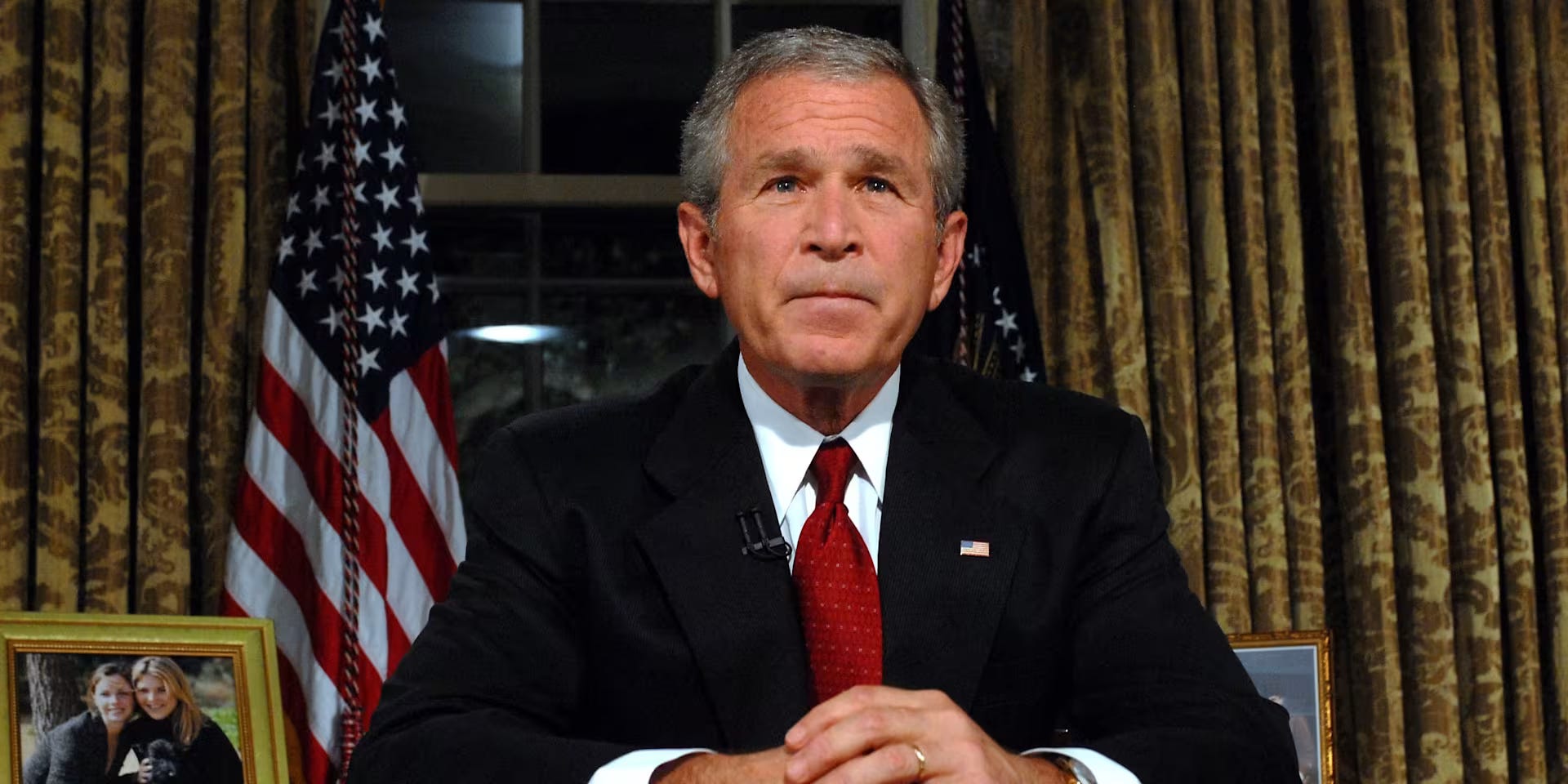
Former president George W. Bush (Getty images)
This firing of prosecutors based on the political implications of their prosecution decisions became a serious scandal. It violated the well-established norms of Justice Department independence from the White House and the pursuit of prosecutions without regard to politics. The new Democratic Congress held hearings and called DOJ officials to testify. A report by the Justice Department Inspector General concluded that the firings were done for improper political reasons and cast doubt on the integrity of the Department’s charging decisions. A special counsel was appointed who ultimately concluded the dismissals were political but that criminal charges were not justified. A number of senior officials were forced to resign as a result of the scandal, including Attorney General Alberto Gonzales and Deputy Attorney General Paul McNulty.
An offshoot of this investigation involved another name that’s a blast from the past: Monica Goodling. She had served as the Justice Department’s White House liaison and was involved in putting together the list of U.S. Attorneys to be fired. She was forced to resign and later admitted she had unlawfully used political considerations to make hiring decisions for career employees at DOJ, insisting that new employees be Republicans and conservative loyalists. (Does any of this sound familiar?)
The More Things Change . . .
During this little trip down memory lane, one can’t help but be struck by how the political environment in this country has changed. Twenty years ago, evidence that the criminal justice system was being manipulated for political purposes led to a major scandal, investigations, and resignations. Today, Trump has so normalized this dangerous behavior that the story barely registers.
It’s also striking that, to some extent, Trump is simply running the same plays out of an old Republican playbook: claiming that if Republicans lose there must have been voter fraud, and seeking to use criminal prosecution to pursue political goals. But this administration is much more brazen and aggressive about running those plays; Trump has taken it to a whole new level.
There is another interesting parallel: the 2006 midterms were a “Blue Wave” election, when control of both the House and the Senate flipped from Republican to Democrat. Following that election, the Democrats in Congress aggressively investigated the abuses by the Bush White House and politicization of the Justice Department.
Don’t hold your breath waiting for Todd Blanche to appoint a special counsel. But if the Democrats win back control of one or both houses of Congress this fall, they must aggressively investigate this incident and Trump’s corruption of the Justice Department. They must subpoena Justice Department officials to testify under oath about Trump’s politicization of the Department and begin considering legislative reforms that might prevent a future administration from engaging in similar conduct.
Exposing Trump’s abuses will be an essential step along the long, hard road that lies ahead if we are to restore the public’s faith in the Department of Justice.