

You’ve probably read recently about an old legal doctrine called the presumption of regularity. This judge-made rule provides that courts generally will presume executive branch officials are trying in good faith to abide by the law and are being candid with the court while carrying out their duties. It’s only a presumption and is always subject to being rebutted by evidence to the contrary. But in general, the presumption of regularity means courts will give the government the benefit of the doubt when addressing claims that its officials have done something improper.
In a little more than a year, the Trump administration has squandered the judicial trust that took decades to build and that led to this presumption. In case after case, judges have found that government officials have misled the court, failed to follow the law or court orders, or abused the criminal justice process. Judges in some of these cases have openly questioned whether the presumption of regularity should still apply.
I’d argue it’s reaching the point where judges would be justified in flipping the presumption on its head: if this administration is accused of misconduct, a court can start from the assumption there is probably something to the accusation, absent clear evidence to the contrary.
Call it the presumption of irregularity.
The fate of the presumption of regularity is less important than what is signaled by its demise. A government that fails to honor its obligations to act in good faith, follow the law, and be candid with the courts is incredibly dangerous. Fortunately, the independent judiciary continues to shine a spotlight on these threats to the rule of law and to push back on the abuses. I’ll discuss just a few recent examples.
The Minnesota Grand Jury Subpoenas
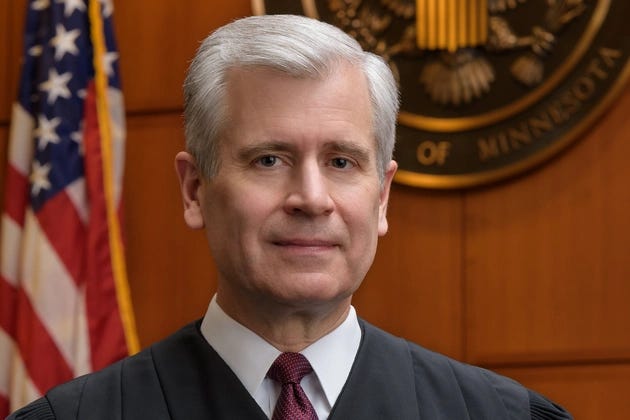
Chief Judge Patrick Schiltz, U.S. District Court for the district of Minnesota
On June 17, the Chief Judge for the Minnesota federal district court granted motions to quash six federal grand jury subpoenas served on the offices of Governor Tim Walz, the Mayors of Minneapolis and St. Paul, and other state agencies. The Justice Department issued the subpoenas during the federal immigration enforcement surge in Minneapolis/St. Paul during which two citizens, Renee Good and Alex Pretti, were killed by federal agents. The Trump administration claimed at the time that state officials were violating the law by refusing to assist the federal government in its immigration crackdown. These subpoenas allegedly were part of an investigation of those claims.
The subpoenas called for a wide range of records, dating back to January 1, 2025, regarding the state’s enforcement of immigration laws. Chief Judge Patrick Schiltz – a George W. Bush appointee and former Scalia clerk – agreed with the state officials that the subpoenas were issued for an unlawful purpose. Schiltz noted that under our federalist system, the federal government cannot compel the states to assist in enforcing federal law. Accordingly, the subpoenas were directed at activity “that is not only legal, but constitutionally protected from interference by the very federal government that issued the subpoenas.”
Chief Judge Schiltz concluded the evidence was “overwhelming” that “these subpoenas were not issued to investigate, but to harass, coerce, and retaliate.” He found that the federal government had failed to provide any remotely justifiable investigative reason for the subpoenas, and they were issued “as part of an unconstitutional effort to coerce Minnesota officials into assisting the federal government with enforcing civil immigration laws and to harass and retaliate against them for failing to do so.”
It’s extremely rare for a grand jury subpoena to be quashed. Grand juries are allowed to paint with a broad investigative brush and a grand jury subpoena is generally presumed to be reasonable. Under the presumption of regularity, courts would ordinarily assume that prosecutors conducting a grand jury investigation were acting in good faith and had a reasonable basis for seeking the subpoenas.
But Schiltz expressly noted that these subpoenas were issued “against the backdrop of the Trump administration’s well-established history of using criminal investigations to retaliate against and pressure the President’s political and personal adversaries.” The Trump administration’s pattern of abusing the criminal justice system played a role in the court’s conclusion that the administration had forfeited its right to the benefit of the doubt.

The Broadview Six Prosecution
Last October the Justice Department indicted six political activists who took part in protests against the federal immigration enforcement surge in Chicago last fall. The protests took place at an ICE detention facility located in Broadview, just outside of Chicago.
The defendants were charged with conspiracy and with forcibly interfering with federal law enforcement officers. During the course of pretrial proceedings the defense began to suspect there had been government misconduct before the grand jury and persuaded the judge to review the grand jury transcripts. Prosecutors submitted redacted versions of the transcripts. They also mysteriously and voluntarily reduced the charges from felonies to misdemeanors, apparently hoping to ward off further review of the grand jury proceedings. That didn’t work, and following a further court order they finally submitted the unredacted transcripts.
On May 20, the judge ordered anyone from the prosecutor’s office who had participated in the redactions to appear personally in court. When they did, the judge announced she had found substantial prosecutorial misconduct and that she had “never seen the types of prosecutorial behavior before a grand jury that I saw in those transcripts.” She said prosecutors had improperly personally vouched for witnesses in the grand jury, had improper communications about the case with grand jurors outside the grand jury room, and had removed from the grand jury some jurors who apparently were inclined not to indict.
But perhaps the most serious issue was that prosecutors had redacted the evidence of their misconduct from the first grand jury transcripts they provided to the judge. They not only engaged in the misconduct, they tried to cover it up. The judge said this could lead to sanctions for prosecutorial misconduct and ethical violations. Following that hearing, the U.S. Attorney for Chicago, Andrew Boutros, personally moved to dismiss all the charges with prejudice, and the judge promptly granted the motion.
Since the dismissal, the defendants have moved to have the government pay their attorney’s fees under a federal law that provides for fees if the government brings charges that are “vexatious, frivolous, or in bad faith.” Defendants who seek attorney’s fees under this law very rarely succeed. But in a remarkable move, the government has agreed not to oppose the motion and says it will pay the fees for the Broadview defendants. This highlights just how clear the evidence of misconduct was, and how desperately the government wants to avoid any further proceedings regarding that misconduct.
During a hearing over the grand jury issues, the judge said she believed in the presumption of regularity and had been operating under that presumption when she initially took the word of prosecutors regarding what had happened in the grand jury. But now, she noted, “That trust has been broken.”
If you want to learn more about the twisted history of the Broadview Six prosecution, Eric Columbus has a great rundown here in Lawfare.
Other Grand Jury Misconduct
These are far from the only recent cases involving grand jury misconduct. For example, in May federal judges dismissed nine felony indictments in Wyoming after it was revealed that the U.S. Attorney there, Darin Smith, had prejudiced the proceedings. Smith handed out business cards to grand jurors and told them the cases they were about to hear were “slam dunks” involving defendants who were “murderers” and who “did what you are going to hear about.”
And in the “greatest hits” category, don’t forget about the ill-fated Lindsey Halligan, whom Trump named the U.S. Attorney for the Eastern District of Virginia despite the lack of any relevant experience. Halligan promptly indicted Trump foes James Comey and Letitia James on bogus charges, presenting the cases to the grand jury herself. Those cases were ultimately dismissed because a judge found that Halligan’s appointment was unlawful. But prior to that dismissal the judge in Comey’s case had found substantial evidence of Halligan’s misconduct in the grand jury and was in the process of examining those issues.

Grand jury proceedings are conducted in secret and by the prosecutor alone; there is no judge or defense attorney present. For that reason, the prosecutor’s obligation to follow the law and ensure that justice is done is never greater than it is in the grand jury. In ordinary times, it’s extremely rare for a judge to go behind the face of a grand jury indictment or subpoena and question the prosecutors’ behavior in the grand jury. But under this administration, in case after case judges are finding that they can no longer rely on the presumption of regularity in grand jury proceedings and are agreeing to look behind the curtain of grand jury secrecy for potential misconduct.
The Contempt Proceedings Before Judge Boasberg
The problems with the government’s behavior are not, of course, limited to grand jury abuse (although, with my background, that’s an area of particular concern to me). Another early contributor to the demise of the presumption of regularity is in the news again. You might recall in April of 2025 when Chief Judge Boasberg of the D.C. federal district court held emergency hearings about the government’s efforts to deport two planeloads of Venezuelans to a notorious prison in El Salvador. Boasberg ordered that the planes not take off and that any already in the air be turned around. But the flights departed anyway and the passengers were imprisoned.
Boasberg subsequently began hearings to determine whether government officials had willfully violated his orders and might be subject to contempt of court. A government whistleblower revealed that then-senior DOJ official Emil Bove (now a judge on the Third Circuit) had told prosecutors they might have to say “Fuck you” to the judge if they were ordered to stop the deportations. It appears that’s essentially what the prosecutors did, even if not in so many words. Boasberg ultimately found probable cause that DOJ officials had willfully violated his orders and began proceedings to require them to show cause why they should not be held in contempt.
Those contempt proceedings have been on hold for more than a year, due to a series of stays granted by the D.C. Circuit. Last April a divided three-judge panel finally ordered Boasberg to drop the contempt proceedings, holding that he was interfering with the executive branch’s authority to manage immigration policy and national security. But now the entire court has agreed to decide en banc whether Boasberg may proceed. In a very unusual development, a group of 174 former judges filed an amicus brief urging the full court to take the case, arguing that it is essential to judicial authority that judges be allowed to enforce their orders through contempt proceedings.
The flights are long over and the prisoners have since been released. But that doesn’t mean the question whether federal officials willfully violated court orders just goes away. Oral argument before the D.C. Circuit is set for the fall and appeals to the Supreme Court will likely follow, so nothing is going to happen very quickly. But I’m still holding out hope that someday we will see Chief Judge Boasberg holding contempt of court proceedings where Judge Bove is forced to appear as a potential defendant.
The Presumption of Irregularity
Prosecutors and other federal officials are routinely behaving in ways that would have been unthinkable in any prior administration. As Chief Judge Schiltz remarked in a different case involving alleged illegal detentions by ICE: “The Court is not aware of another occasion in the history of the United States in which a federal court has had to threaten contempt — again and again and again — to force the United States government to comply with court orders.” Courts are realizing they can no longer rely on the presumption that government officials are acting in good faith and are trying to obey the law. In reality, assuming the opposite may be more appropriate.
When my former colleagues and I stood before a court and said we were there on behalf of the United States, we recognized it was an honor that came with solemn obligations. Of course there occasionally were individual bad actors; no one would claim the system was perfect. But we understood we had a higher duty to the justice system and the rule of law; that our job was not simply to win by any means necessary. There is little sign that officials in this administration recognize those obligations. That’s why so many former judges and prosecutors, of both political parties, are horrified by what the Justice Department has become and are speaking out against the administration’s abuses.
Many of my friends on the defense side likely believe the death of the presumption of regularity is long overdue, that it was never justified in the first place. Losing the presumption honestly doesn’t bother me that much; in the end, the facts of a case are what matter. What’s far more concerning is what the death of the presumption says about this administration’s behavior. Prosecutors and other government officials have tremendous power, much of it exercised outside of public view. If they don’t honor their obligations to follow the law and be candid with the courts, they can do tremendous damage.
These high-profile cases being discussed are just the ones we know about. Not all defendants have the resources to mount a lengthy court battle to expose government misconduct. Even for those with the resources, the misconduct may never come to light. The rule of law depends on public officials who do their best to follow their legal obligations even when no one is watching, and even if a court hasn’t expressly ordered them to do so.
Over decades, the behavior of federal officials who recognized their duty to the courts and to the public led judges to be comfortable with the presumption of regularity. That comfort has largely evaporated. The damage this administration is doing to the Justice Department’s reputation and standing, with the courts and with the public, unfortunately will persist long after Trump has left the stage.
Anything for their dark Lord king Krasnov.
Assume they're lying.